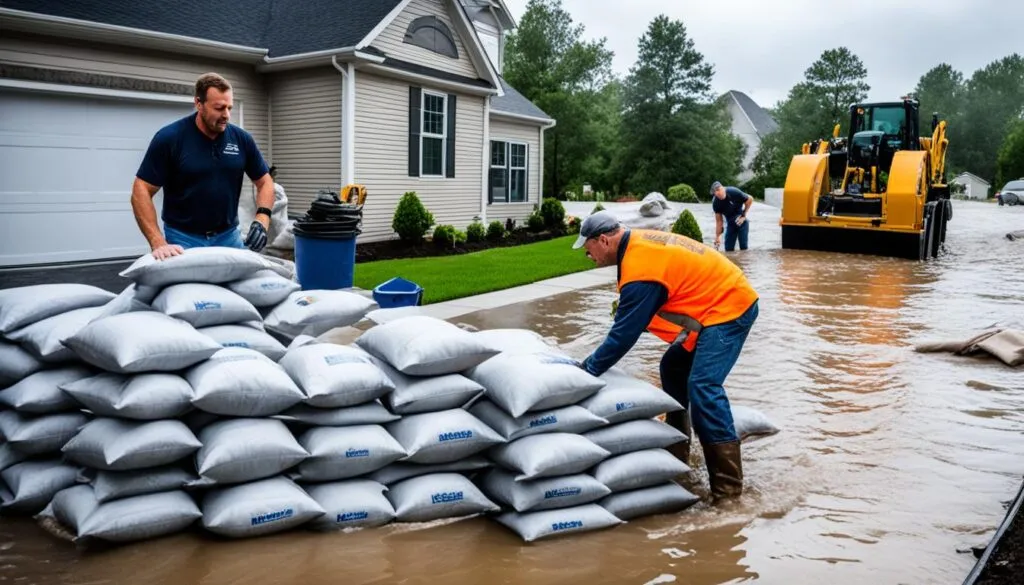
Each year, floods rack up over $40 billion in damages worldwide. This big number highlights the importance of Flood Water Removal Techniques. When water levels rise, quick water extraction and emergency water removal are key. They help avoid total loss and start recovery.
First, know how the water mitigation process works in flood situations. We will lead you through effective water damage cleanup strategies. This guide covers everything, including getting help from professional flood restoration experts for high-quality water removal.
It’s about keeping you safe and getting things back to normal after a flood. Follow us for tips to handle flood aftermath smartly.
Dealing with flood aftermath is important for both property owners and experts. They must know the dangers and how to stay safe. This knowledge prevents harm to people and further damage to property.
It’s essential to follow safety steps during flood cleanups to avoid accidents. Wearing the right protective gear is key. Here’s what you need:
Check the building’s stability and flood risks before starting cleanup. Safe operations need a strong structure.
Evaluating flood severity helps plan the cleanup. Look at water depth, how long the area was flooded, and water type. Below is a checklist:
Structural Stability Assessment Checklist
| Assessment Area | Details | Required Action |
|---|---|---|
| Foundation Integrity | Inspect for cracks and settling | Stabilize if compromised |
| Wall Strength | Check for bulging or warping | Support or remove unstable sections |
| Floor Systems | Examine for sagging or buckling | Reinforce if necessary |
| Utility Connections | Assess electrical and plumbing systems for damage | Disconnect and repair before cleanup |
The U.S. Army Corps of Engineers is key in managing floods. They offer their expertise and help during floods. Working with the Corps gives access to expert advice and complies with laws.
Communities worldwide are tackling floodwater challenges head-on. The shift from old methods to modern solutions is pivotal. Now, we focus on technological advances that make fighting floods more effective.
For years, sandbags were the go-to for flood defense. But, they require a lot of work and don’t always keep water out. Nowadays, we have self-inflating sandbags and water-filled cofferdams. These options are quicker to deploy and better for the environment.
Pumps are a game-changer in removing floodwater. They can move huge amounts of water quickly. For indoor floods, wet vacuums help clean up. This is often the first step in fixing water damage.
New technologies are improving flood cleanup. Tools now have sensors to measure moisture accurately. Smart systems can even control pumps automatically, making water removal more efficient.

These new methods make dealing with floods better. They help build stronger communities and infrastructures. By adopting these techniques, we can lessen flood damages and speed up recovery.
Being hit by a flood can feel overwhelming, but knowing how to remove flood water from your house helps a lot. For residential flood water removal, it’s key to focus on safety, being thorough, and quick. Doing this ensures effective water damage restoration in your home.
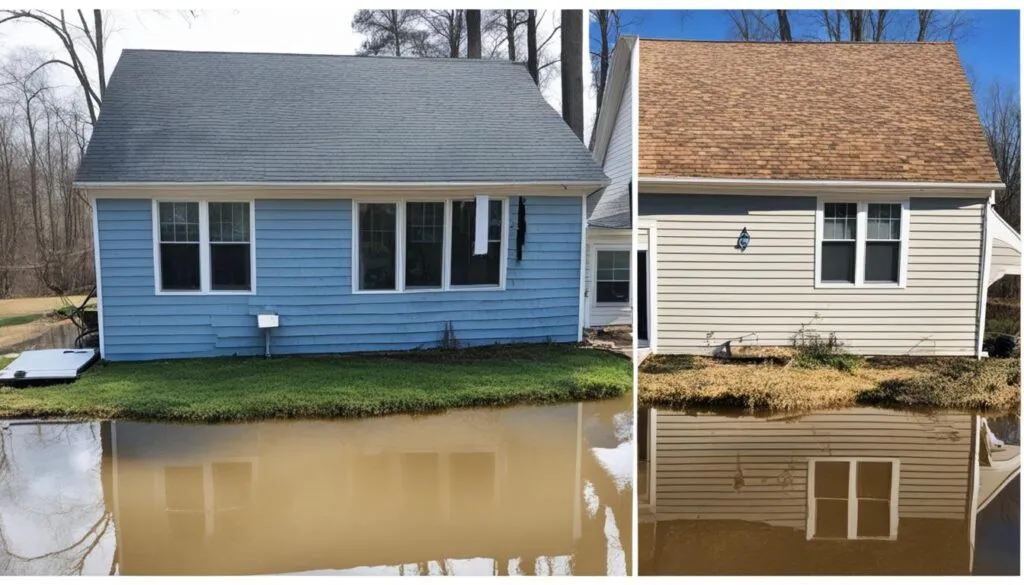
To properly begin water damage restoration in homes, you need a step-by-step plan to get rid of the flood water. These steps are vital:
When it comes to thorough water damage repair, many homeowners turn to pros. These experts have both the skills and the right gear for proper residential flood water removal.
Remember: Acting fast is key to preventing mold and further damage to your home.
Here is a table showing some gear and points to consider for residential flood water removal.
| Equipment/Consideration | Function/Importance |
|---|---|
| Submersible Pumps | Great for getting rid of large amounts of water quickly |
| Wet/Dry Vacuums | Crucial for pulling water out of floors, carpets, and fabrics |
| Air Movers and Dehumidifiers | They help dry things faster and remove moisture from the air |
| Personal Protective Equipment (PPE) | Keeps you safe while cleaning up |
| Professional Assessment | Makes sure everything is checked and fixed right after the water is gone |
Choosing professional water damage restoration services for the clean-up and repairs makes a huge difference. A good restoration company takes care of the whole process, ensuring your home becomes safe and cozy again.
Knowing these methods and acting quickly can save you a lot of time and money. If you ever experience a flood, start these steps right away or call a pro to help with residential flood water removal and protect your home.
Looking back, we learned how crucial safe water extraction and damage control are after a flood. We saw that successful flood cleanup requires careful planning and a deep understanding of the risks. It’s not about luck. Each step, from wearing the right safety gear to using advanced tools, is critical. These steps help reduce water damage and make recovery easier.
Floods can happen suddenly, causing major damage. Yet, with expert flood restoration techniques and careful following of advice, we can be ready. This readiness helps us face water disasters directly. It’s not only about fixing properties but also about helping people get their lives back to normal. A careful plan for removing flood water is vital to keep people safe and buildings strong.
In sum, this guide gives us a strong base to understand flood water removal’s complex aspects. A mix of safety, effectiveness, and new technology is important. For those dealing with flood challenges, using these cleanup tips is crucial for safe and successful restoration. Acting quickly and focusing on prevention can lessen water damage effects. This protects our homes and businesses.