Each year, floods rack up over $40 billion in damages worldwide. This big number highlights the importance of Flood Water Removal Techniques. When water levels rise, quick water extraction and emergency water removal are key. They help avoid total loss and start recovery.
First, know how the water mitigation process works in flood situations. We will lead you through effective water damage cleanup strategies. This guide covers everything, including getting help from professional flood restoration experts for high-quality water removal.
It’s about keeping you safe and getting things back to normal after a flood. Follow us for tips to handle flood aftermath smartly.
Dealing with flood aftermath is important for both property owners and experts. They must know the dangers and how to stay safe. This knowledge prevents harm to people and further damage to property.
It’s essential to follow safety steps during flood cleanups to avoid accidents. Wearing the right protective gear is key. Here’s what you need:
Check the building’s stability and flood risks before starting cleanup. Safe operations need a strong structure.
Evaluating flood severity helps plan the cleanup. Look at water depth, how long the area was flooded, and water type. Below is a checklist:
Structural Stability Assessment Checklist
| Assessment Area | Details | Required Action |
|---|---|---|
| Foundation Integrity | Inspect for cracks and settling | Stabilize if compromised |
| Wall Strength | Check for bulging or warping | Support or remove unstable sections |
| Floor Systems | Examine for sagging or buckling | Reinforce if necessary |
| Utility Connections | Assess electrical and plumbing systems for damage | Disconnect and repair before cleanup |
The U.S. Army Corps of Engineers is key in managing floods. They offer their expertise and help during floods. Working with the Corps gives access to expert advice and complies with laws.
Communities worldwide are tackling floodwater challenges head-on. The shift from old methods to modern solutions is pivotal. Now, we focus on technological advances that make fighting floods more effective.
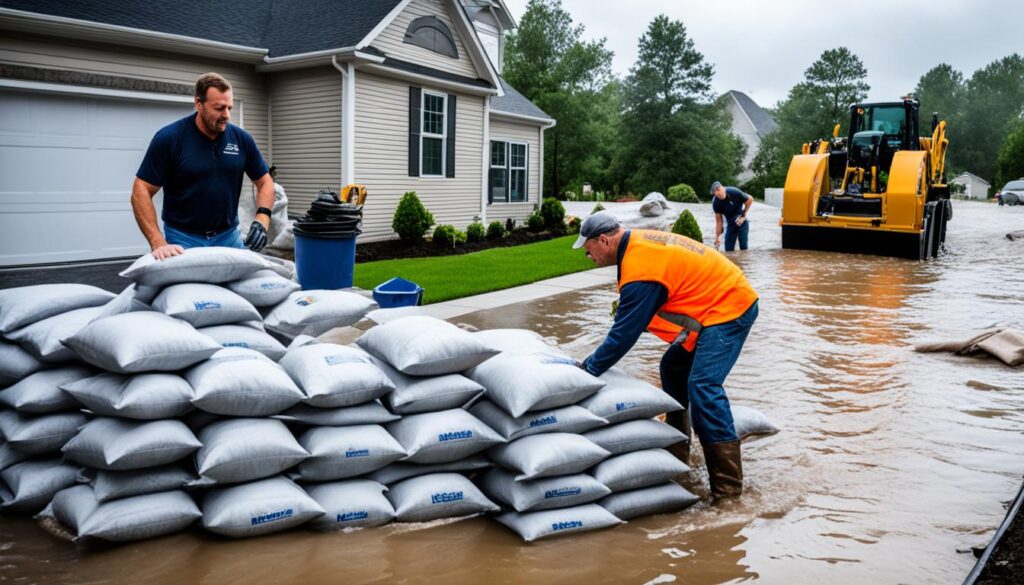
For years, sandbags were the go-to for flood defense. But, they require a lot of work and don’t always keep water out. Nowadays, we have self-inflating sandbags and water-filled cofferdams. These options are quicker to deploy and better for the environment.
Pumps are a game-changer in removing floodwater. They can move huge amounts of water quickly. For indoor floods, wet vacuums help clean up. This is often the first step in fixing water damage.
New technologies are improving flood cleanup. Tools now have sensors to measure moisture accurately. Smart systems can even control pumps automatically, making water removal more efficient.

These new methods make dealing with floods better. They help build stronger communities and infrastructures. By adopting these techniques, we can lessen flood damages and speed up recovery.
Being hit by a flood can feel overwhelming, but knowing how to remove flood water from your house helps a lot. For residential flood water removal, it’s key to focus on safety, being thorough, and quick. Doing this ensures effective water damage restoration in your home.
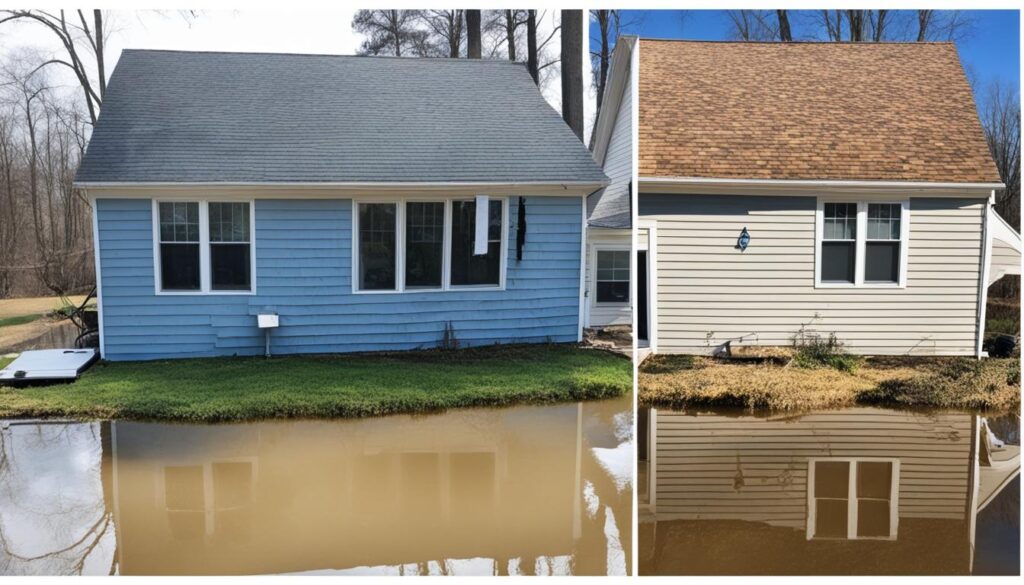
To properly begin water damage restoration in homes, you need a step-by-step plan to get rid of the flood water. These steps are vital:
When it comes to thorough water damage repair, many homeowners turn to pros. These experts have both the skills and the right gear for proper residential flood water removal.
Remember: Acting fast is key to preventing mold and further damage to your home.
Here is a table showing some gear and points to consider for residential flood water removal.
| Equipment/Consideration | Function/Importance |
|---|---|
| Submersible Pumps | Great for getting rid of large amounts of water quickly |
| Wet/Dry Vacuums | Crucial for pulling water out of floors, carpets, and fabrics |
| Air Movers and Dehumidifiers | They help dry things faster and remove moisture from the air |
| Personal Protective Equipment (PPE) | Keeps you safe while cleaning up |
| Professional Assessment | Makes sure everything is checked and fixed right after the water is gone |
Choosing professional water damage restoration services for the clean-up and repairs makes a huge difference. A good restoration company takes care of the whole process, ensuring your home becomes safe and cozy again.
Knowing these methods and acting quickly can save you a lot of time and money. If you ever experience a flood, start these steps right away or call a pro to help with residential flood water removal and protect your home.
Looking back, we learned how crucial safe water extraction and damage control are after a flood. We saw that successful flood cleanup requires careful planning and a deep understanding of the risks. It’s not about luck. Each step, from wearing the right safety gear to using advanced tools, is critical. These steps help reduce water damage and make recovery easier.
Floods can happen suddenly, causing major damage. Yet, with expert flood restoration techniques and careful following of advice, we can be ready. This readiness helps us face water disasters directly. It’s not only about fixing properties but also about helping people get their lives back to normal. A careful plan for removing flood water is vital to keep people safe and buildings strong.
In sum, this guide gives us a strong base to understand flood water removal’s complex aspects. A mix of safety, effectiveness, and new technology is important. For those dealing with flood challenges, using these cleanup tips is crucial for safe and successful restoration. Acting quickly and focusing on prevention can lessen water damage effects. This protects our homes and businesses.
After a flood, more than half of homes may need major repairs. This shows how powerful nature can be. Once the floodwaters go down, it’s crucial for residents to take Immediate Actions to Take After a Flood. These steps help make sure everyone stays safe and starts the recovery. The right flood cleanup steps protect your home and keep everyone healthy.
Knowing how to handle flood damage restoration is key after a flood. Having good post-flood safety precautions makes a big difference. Quick and smart actions reduce more damage. They can even save lives if there are hidden dangers in the water.
Making sure everyone is safe and things get back to normal fast is important. This article will show you the key steps for a safe and effective recovery.
After a flood, it’s critical to prioritize your and your property’s safety. You’ll need to understand the risks and take the right steps to stay safe. Listen to public advisories and carefully check the safety of your surroundings.
It’s important to pay attention to official flood warnings. These warnings come through various means to direct your next moves. Follow evacuation orders closely. And don’t go back until it’s confirmed safe by authorities, usually with an “all clear” message.
Checking a building’s stability after flooding is a must. Look for clear damage signs like cracks, unaligned walls, or bent roofs. This is when you should get experts to inspect thoroughly to avoid accidents.
Floodwaters are often full of dangerous contaminants. They can hold harmful substances, making direct contact risky. Always be cautious and wear proper safety gear around these waters.
Gas leaks and electrical risks are common post-flood dangers. Smelling gas means you should call your gas company right away. Steer clear of the electrical system until a professional says it’s safe.
Getting the latest info is vital during a flood. Use local news and apps to stay in the loop about roads and services.
| Potential Hazard | Preventive Action |
|---|---|
| Structural Damage | Professional assessment of building stability |
| Contaminated Water | Avoidance and use of protective clothing |
| Gas Leaks | Immediate reporting and professional inspections |
| Electrical Systems | Cautious approach and expert evaluation |
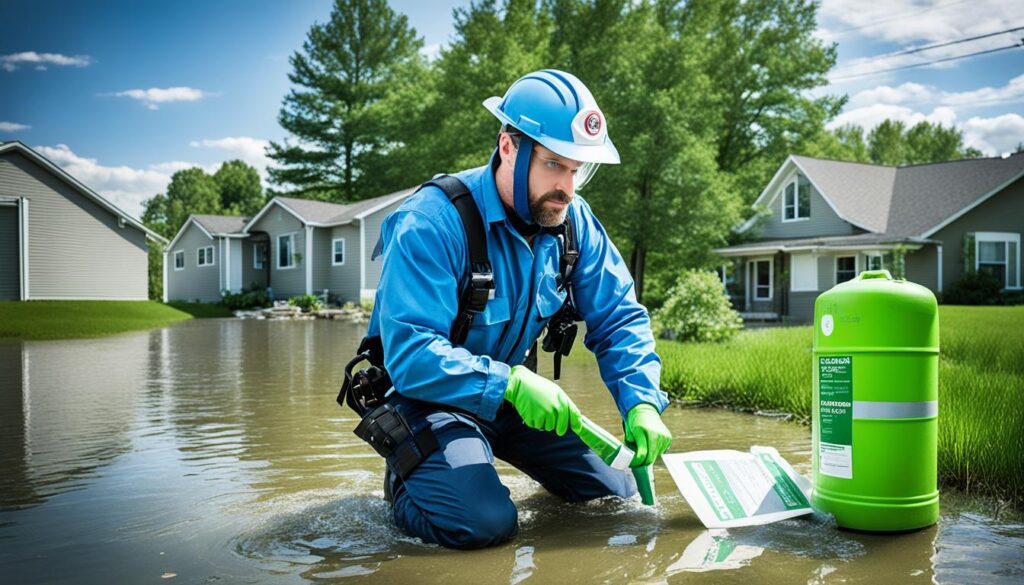
After a flood, it’s vital to start flood damage cleanup and water damage restoration quickly. This helps lessen more damage, stop mold, and save your stuff. Let’s go over key steps to follow right after a flood.
These steps are important for fixing your space and keeping you healthy. Make sure to keep an eye out for mold and keep your place dry.
Here’s a table that shows what to do and why, making it easier to understand how these actions help.
| Action | Purpose | Tools/Services Needed |
|---|---|---|
| Water Extraction | Remove standing water to prevent further damage and mold growth | Pumps, Wet/Dry Vacuums |
| Drying & Ventilation | Eliminate residual moisture and promote airflow | Dehumidifiers, Fans |
| Debris Removal | Dispose of unsalvageable items and reduce health risks | Protective Gear, Waste Disposal Services |
| Mold Inhibition | Prevent mold spores from taking root and spreading | Mold Cleaners, Inhibitors |
| Insurance Claim Documentation | Accurately record flood impact for claim substantiation | Camera, Detailed Inventory List |
| Flood Restoration Services | Comprehensive cleanup and restoration especially in severe cases | Professional Restoration Companies |
Working with trusted professional flood restoration services makes the clean-up easier. They make sure everything is done right and carefully.
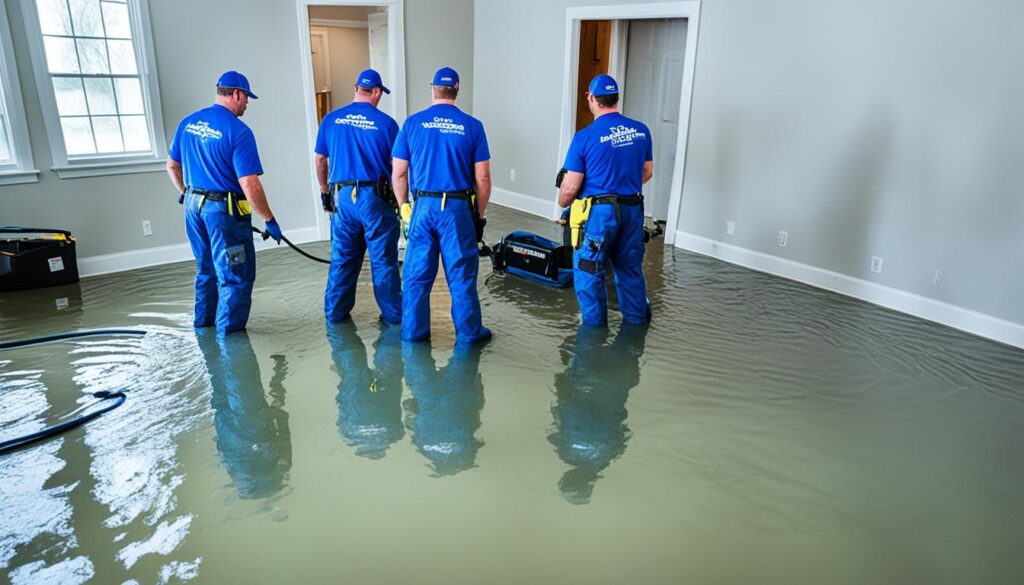
After a flood, everyone faces tough times. Following key flood recovery steps and post-flood safety measures helps lessen impacts. Quick actions prevent more damage and help heal properties and people faster.
It’s crucial to act quickly and wisely. Before fixing or moving back in, make sure your place is safe. Check for gas problems and damaged wiring. Also, be careful with pollution and record all damages for insurance.
When floods hit, communities show their strength by how well they prepare and react. Sticking to post-flood safety measures and recovery steps helps things get back to normal. Asking experts for help is a smart move for safe recovery.
Every year, floods in the US cause over $3 billion in damage. This huge cost shows how deeply these disasters affect communities across the nation. It highlights why it’s key to understand flood damage and use effective flood damage assessment methods. Doing so helps protect lives and properties.
The impacts of flood damage are vast. They can destroy homes and upset local economies. The effects last long after the floodwaters go down. So, we need to look closely at why floods happen, what they cause, and how to fight them.
This article aims to educate and equip our readers. We’ll share knowledge and ways to lessen flood impact on your life. By reviewing past floods, expert advice, and practical tips, we’ll tackle this complex issue. Let’s move towards understanding flood damage to find safer paths forward.
Flood damage starts with many causes, both natural and human-made. It leads to immediate and long-term problems. We’ll look into these effects and their wide-reaching impacts.
Common causes of flooding vary widely. These include heavy rains and snow melting. Human actions, like large-scale urbanization, also play a big part. Together, these factors cause waterways to overflow. Understanding them helps us prepare better.
The immediate consequences of flood damage are serious. They go beyond damaging property and introduce major health risks. Floodwater can carry diseases and cause accidents. Addressing these dangers quickly protects everyone’s well-being.
Water’s hidden effects damage structures slowly. Mold and weakened foundations are just the start. The costs of repairs and lost income show the harsh economic losses from flood damage. It’s clear we need solid plans to handle these issues.
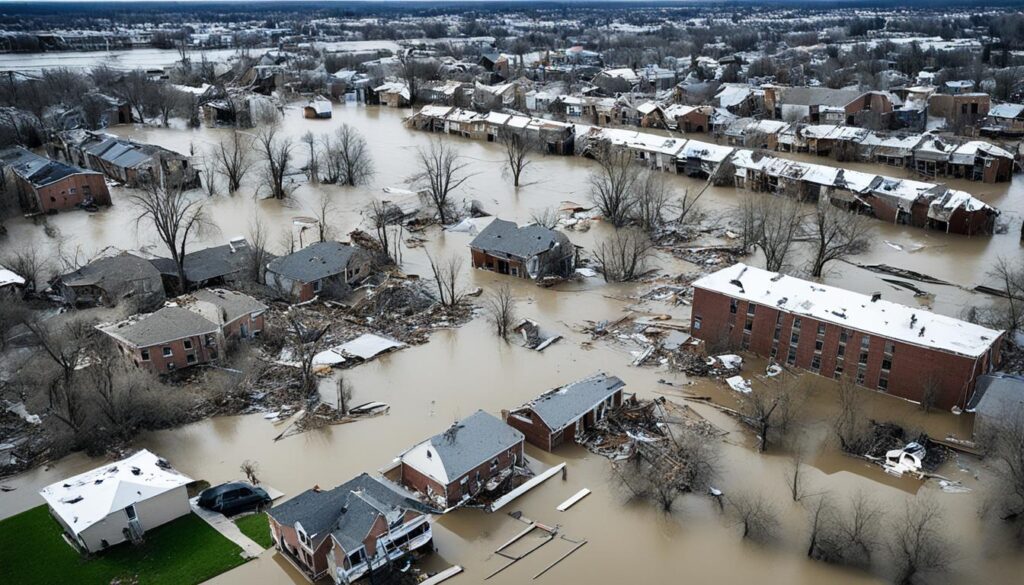
Understanding the causes and effects of floods is key to fighting their impacts. Preparedness, quick response, and recovery plans are essential. They help people rebuild their lives and stay safe.
The need to prevent flood damage grows as climate patterns change. This increases flood risks. Communities and individuals can use many flood prevention strategies to protect their homes and jobs. Learning and using these methods can really help in mitigating flood impact, which reduces flood risks a lot.
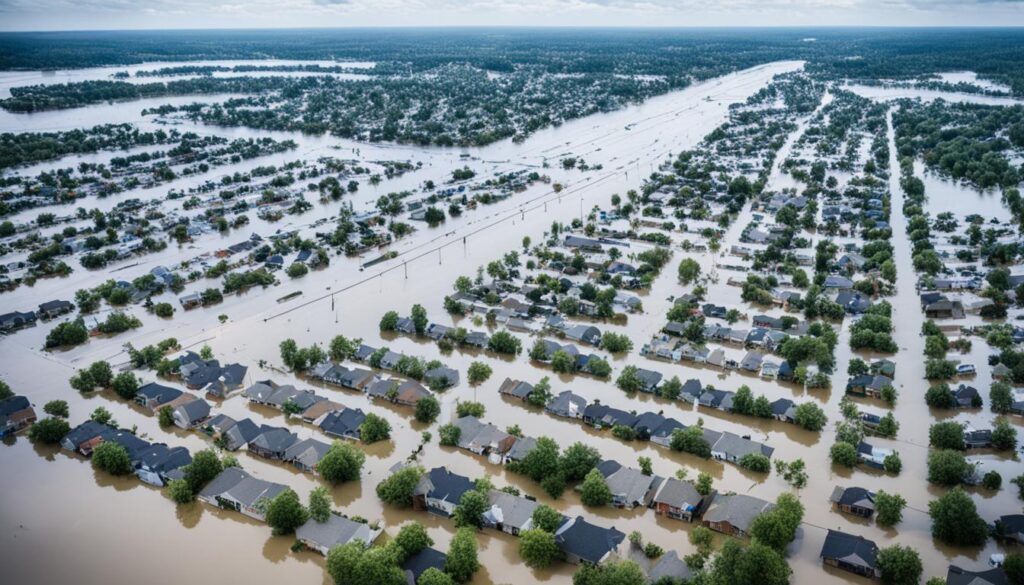
Using land wisely is key to stop floods. It means planning how to use land to lessen soil erosion and manage water runoff. This helps a lot in preventing flood damage, keeping natural water paths safe, and avoiding building in flood-risk areas.
Setting up physical barriers to block water is also vital. Things like flood barriers, levees, and seawalls keep both cities and countryside safe from floods. With these barriers, we also need good drainage to get rid of extra water quickly, further mitigating flood impact.
Raising buildings in flood-prone areas is a smart move. It could mean lifting current buildings or building new ones higher than expected flood levels. This approach is a big part of staying safe from floods and helps greatly in flood risk reduction.
Lastly, early warning systems are super important. They give people time to get ready for floods by using flood prevention strategies. This saves lives and protects property, reducing damage from floods.
| Strategy | Purpose | Benefits |
|---|---|---|
| Land Management | Minimize soil erosion and manage runoff | Prevents degradation of natural landscapes and maintains natural waterways |
| Flood Barriers | Deter water flow to at-risk areas | Protects infrastructure and residential areas from water damage |
| Drainage Systems | Channel excess water away from populated areas | Reduces standing water and the associated health risks |
| Property Elevation | Keep structures above potential flood levels | Minimizes the need for costly repairs and insurance claims |
| Early Warning Systems | Provide timely alerts to communities | Allows for advanced preparation and evacuation, saving lives and assets |
While we can’t stop all natural disasters, these methods form a strong plan to make communities less vulnerable to floods. By getting better at these strategies, we move towards being more prepared against nature’s challenges.
Going through a flood is tough, leaving many wondering how to start fixing things. The flood cleanup involves several key steps to make a home safe again. Quickly dealing with water damage and repairs can cut down long-term problems, helping everyone return to their usual routines fast.
Right after a flood, stopping more damage is crucial. Experts rush to assess and remove the water. They handle all flood levels, from small leaks to big floods needing a lot of cleanup and repair.
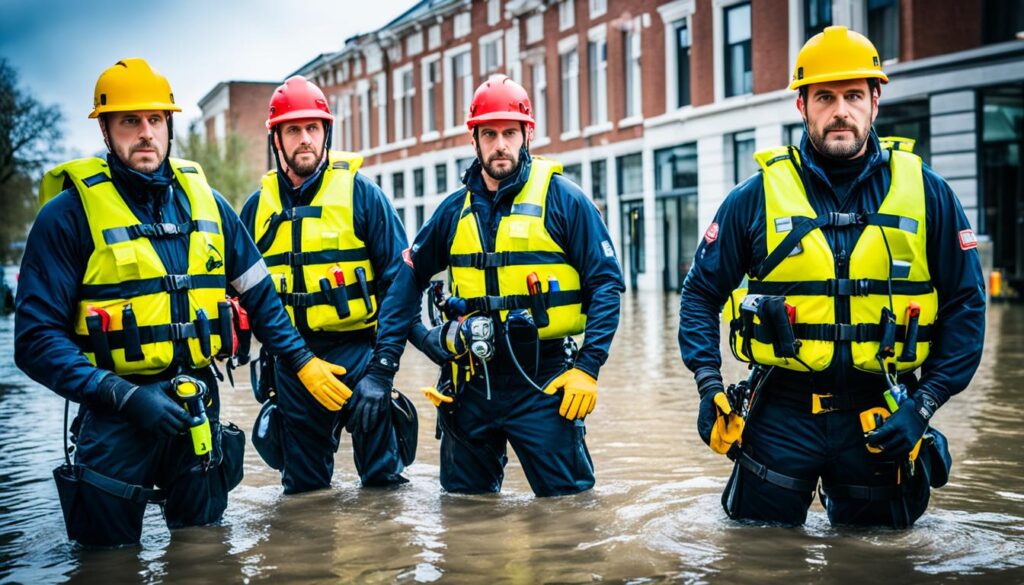
These experts aim to cut down damage fast. Acting quickly can keep the building stable, stop mold, protect wiring, and save the structure.
Drying out the building comes next. This step removes moisture trapped in walls, floors, and furniture to prevent mold. Using advanced dryers and air purifiers, they make sure everything dries out properly. Controlling dampness and air purity stops mold from growing in wet properties.
Stopping mold after a flood needs constant vigilance. Teams thoroughly clean and treat areas to block mold from starting.
Once everything’s dry and mold-free, repairing begins. The last step is making flood-damaged homes look good as new. Restoration pros repair or replace ruined materials, restoring homes to original beauty and strength.
| Restoration Phase | Key Actions | Expected Outcome |
|---|---|---|
| Emergency Response | Assessment, water extraction, damage mitigation | Less secondary damage, mold prevented |
| Structural Drying | Use of dehumidifiers and air movers, monitoring humidity levels | All moisture gone, mold and weakening stopped |
| Reconstruction | Repairing structural elements, replacing damaged materials | Home as good as new, structure and looks preserved |
Knowing about flood cleanup can reassure those facing water damage. With quick action and expert help, recovery is straightforward and within reach.
The study of flood damage shows us how deep its effects go on health, property, and how people live together. We see how bad floods can be when we understand their power to destroy. It’s key to know why floods happen and to plan how to lessen their impact. Working together on ways to prevent damage protects not just homes but whole areas.
Talking about the tough parts of flooding helps us see the problems clearly. But, it also points to how we can solve them. Things like looking after the land, building flood barriers, using technology to predict floods, and getting help quickly are crucial. These show how smart and dedicated we are to beating nature’s challenges. Being ready, staying alert, and acting fast are musts to keep people safe in risky places.
In wrapping up, it’s important for everyone to fight against floods. Floods don’t have to mean total loss. We can win against them with the right early and active steps. Realizing how destructive floods can be is the first step. This helps build stronger, ready communities to face and recover from floods. Our best defense lies in being well-prepared and having expert help.