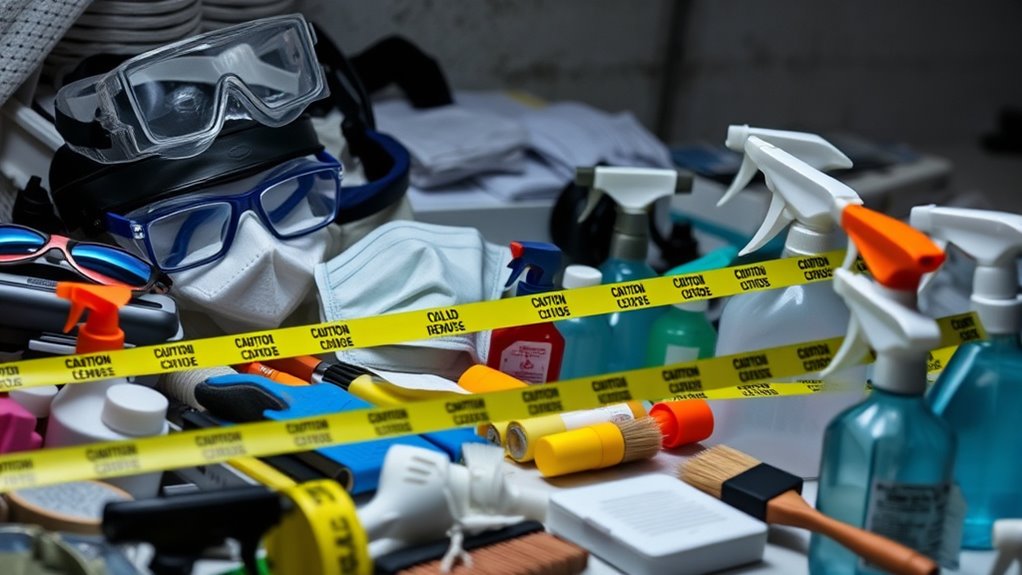
When tackling DIY mold removal, remember to wear N95 masks, gloves, and goggles for protection. Don’t create airborne spores by using fans in moldy areas. Opt for natural cleaners like vinegar or baking soda for safe results, and avoid mixing bleach with other cleaners to prevent toxic fumes. Contain the work area with plastic sheeting to stop spore spread and dry surfaces thoroughly afterward. Discover more about safeguarding your space effectively.
When removing mold from your home, it’s essential to prioritize safety to protect yourself and others.
Start by wearing personal protective equipment like N95 masks, rubber gloves, and goggles to prevent inhaling mold spores and contact with your skin and eyes. Guarantee proper ventilation in the work area, but avoid using fans that might disturb mold.
Use plastic sheeting to contain the work area, preventing spores from spreading. Take care not to disturb mold, as it releases mycotoxins and spores, posing health risks.
Dispose of contaminated materials by placing them in sealed bags to prevent cross-contamination. Avoid inhaling any spores or fumes from cleaning solutions, maintaining a safe environment for everyone involved in the mold removal process.
When tackling mold in your home, you can choose between natural solutions like undiluted white vinegar and baking soda, or commercial mold removal products for a more potent approach.
Natural options are effective and safe for most surfaces, while commercial products often provide faster results but may require more safety precautions.
Consider the surface type and mold severity to decide which solution will work best for you, always ensuring proper ventilation during the cleaning process.
While tackling mold issues in your home, it’s beneficial to explore natural cleaning options that are both effective and eco-friendly.
Undiluted white vinegar serves as a powerful natural mold cleaner, tackling up to 82% of mold species. Spray it directly on surfaces, let it sit, then scrub for effective mold removal.
Hydrogen peroxide is another excellent choice; use a 3% solution to kill mold and maintain hygienic surfaces.
Tea tree oil mixed with water works wonders not only for mold prevention but also leaves a pleasant scent. These cleaning products address hygiene issues effectively.
Baking soda is great too—it absorbs moisture, preventing future growth.
Dealing with mold is never pleasant, but commercial mold removal products offer powerful solutions that can make the task more manageable.
These products often contain strong fungicides to kill mold on contact, making them effective for cleaning mold on tiles and other non-porous surfaces.
However, they may not penetrate porous materials like wood, where mold can return if not fully addressed.
For those concerned about harsh chemicals, eco-friendly mold removers with natural ingredients like tea tree oil are available. They eliminate mold effectively while reducing health problems.
Always read labels for proper usage and follow safety guidelines—wear protective gear like gloves, goggles, and masks.
Address any moisture issues first to prevent mold from returning and guarantee a mold-free environment.
To effectively tackle mold issues, it’s important to first identify and address the sources of moisture that encourage its growth.
Mold thrives in humid environments, so checking for leaks and poor ventilation is essential. Common areas prone to moisture include basements, bathrooms, kitchens, and around windows or pipes. Addressing these issues helps prevent mold growth.
Fix plumbing leaks promptly and make certain roofs are intact to reduce moisture levels. Installing dehumidifiers can help maintain indoor humidity levels below 60%, which is crucial for preventing mold problems. Additionally, timely restoration of water damage is critical in minimizing long-term issues such as mold growth.
Regular cleaning and inspections, especially after heavy rainfall, can reveal signs of dampness or water intrusion. By addressing moisture sources, you can effectively prevent mold issues before they become significant problems.
Mold can be a stubborn nuisance, but with the right techniques, you can effectively remove it from various surfaces in your home.
Start by addressing black mold on hard, non-porous surfaces with a bleach solution—one cup of bleach per gallon of water. Let it sit to kill the spores.
For porous materials like drywall, gently scrub the affected area using a detergent and water solution. In damp environments, use undiluted white vinegar, allowing it to penetrate for 15 minutes before scrubbing.
To prevent mold, dry the area thoroughly with fans or a dehumidifier. On wood, sand first, then clean with a HEPA vacuum.
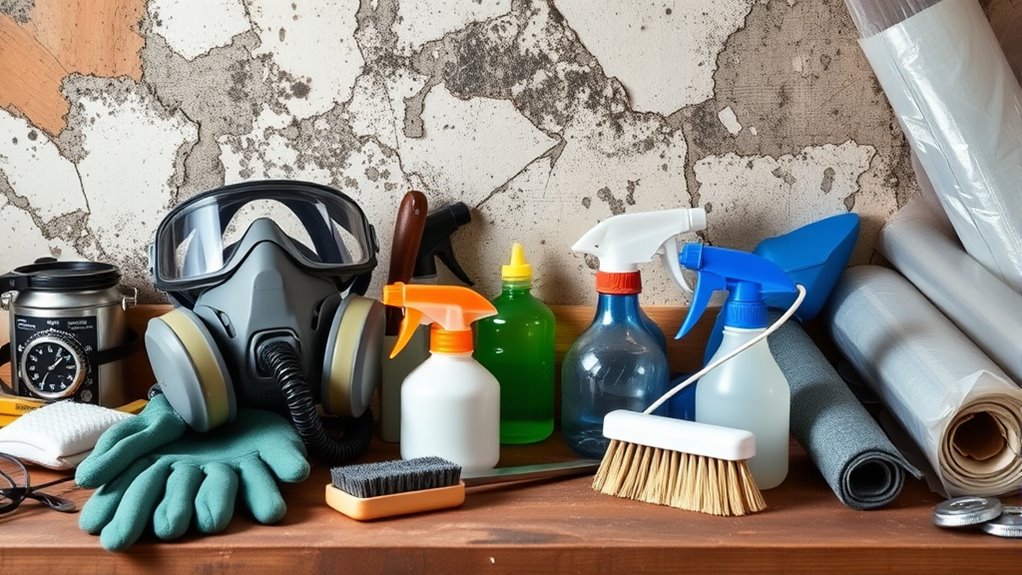
When tackling mold removal, having the right tools and gear is crucial for both effectiveness and safety.
Start by equipping yourself with rubber gloves and protective eyewear to shield your skin and eyes from mold spores. A scrub brush and cleaning cloths are necessary for scrubbing affected areas and wiping away residues.
To prevent mold spores from spreading, use a vacuum with a HEPA filter. Don’t forget N95 masks to avoid inhaling spores.
Prepare effective cleaning solutions using dish soap, white vinegar, or baking soda. These natural ingredients combat mold without harsh chemicals. A spray bottle guarantees even coverage of these solutions.
Equipped with these tools and gear, you’re set to tackle mold removal confidently and safely.
When tackling mold remediation, it’s essential to wear proper protective gear like N95 masks, gloves, and goggles to shield yourself from harmful spores.
Be cautious with cleaning products; mixing bleach with ammonia or other cleaners can create dangerous fumes that threaten your health.
Additionally, make sure you’re not spreading mold spores by using fans in affected areas, as this can exacerbate the problem instead of containing it.
Although tackling mold removal yourself can be challenging, equipping yourself with the right protective gear is essential for your safety and success.
To minimize exposure to mold spores and prevent health risks, always wear appropriate personal protective equipment (PPE). Here’s what you need:
Finally, change out of contaminated clothing and wash separately to keep mold confined.
To guarantee safe and effective mold removal, understanding the precautions for using cleaning products is essential.
In DIY mold remediation, always wear protective gear like gloves and masks to minimize health risks.
When tackling black mold, avoid mixing bleach with ammonia; this toxic combo can harm your health.
Use a bleach solution on non-porous surfaces, mixing 1 cup of bleach with 1 gallon of water, and don’t rinse it off to ensure effectiveness.
For porous surfaces, a 50/50 ammonia-water solution can help, but remember to rinse after 2-3 hours.
As a natural mold killer, undiluted white vinegar is effective on hard surfaces, eliminating 82% of mold species.
Following these cleaning product precautions ensures a safer mold removal process.
If you’re aiming to prevent mold from making a comeback in your home, focusing on controlling humidity is key.
First, remove excess moisture by maintaining indoor humidity below 60%. Use dehumidifiers and guarantee proper ventilation, especially in bathrooms and kitchens.
Second, regularly inspect and repair leaks from plumbing, roofs, or windows to avoid moisture buildup. This practice will considerably enhance air quality and prevent mold growth.
Third, clean and dry any wet surfaces within 24 to 48 hours, making sure mold spores don’t settle and multiply.
Finally, consider using mold-resistant paints and treatments in high-moisture areas, making your home an inhospitable environment for mold.
Here’s a quick checklist:
Tackling mold removal is like steering a ship through stormy waters—armed with the right tools and knowledge, you’ll reach clear skies. Prioritize safety, use effective cleaning solutions, and address mold at its source. Equip yourself with the right gear and avoid common pitfalls. By following these guidelines, you not only remove existing mold but also prevent its return, ensuring a healthier environment. Your diligence today lays the groundwork for a mold-free tomorrow.